

Disinflation and energy
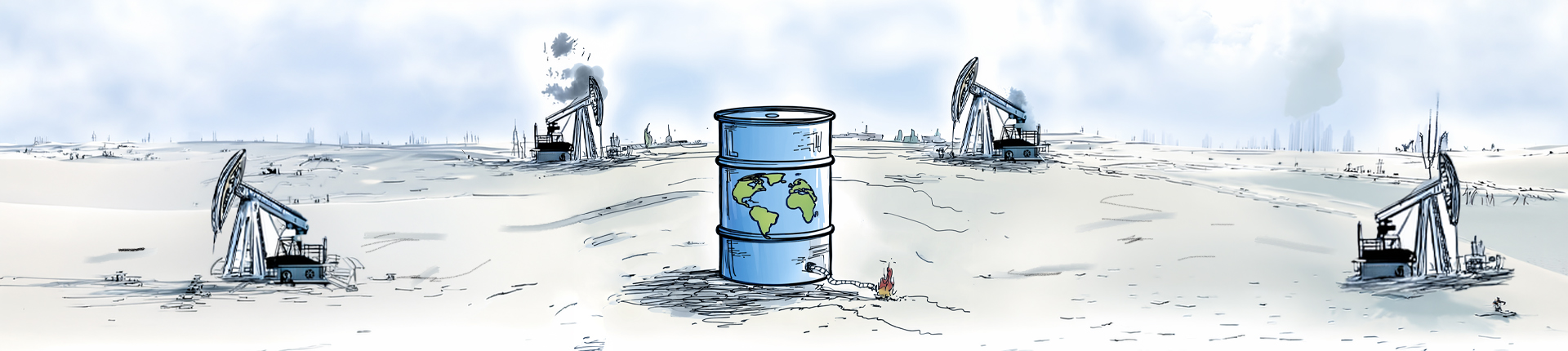
At the start of 2026, the global economy was generally in good shape, but it is currently facing a massive geopolitical test. The escalation in the Middle East has thrown energy markets into turmoil and threatens to undermine the hard-won path toward disinflation. While the fundamental drivers of growth – particularly the AI sector and U.S. fiscal stimulus – remain intact, energy prices currently pose the greatest downside risk to global markets.
In addition to this acute escalation, other significant sources of tension lurk beneath the surface: a cooling labor market in the U.S., the war in Ukraine, and structural growth weakness in Europe. The tariff issue, which was thought to have been resolved, has resurfaced following the U.S. Supreme Court’s ruling and is causing unease. Global growth is projected to be around 2.8% in 2026, matching the previous year’s level – and exceeding the consensus forecast of 2.5%.
Global economy: growth engine is running, but growth is unevenly distributed
Despite the escalating situation in the Middle East, the fundamental outlook for the global economy remains marked by remarkable resilience for the time being – even though growth momentum varies greatly from region to region.
The U.S. continues to be a key driver of growth. We expect GDP growth of approximately 2.6% for 2026, which would put the U.S. economy ahead of the consensus forecast of 2.0%. This growth is being driven by fiscal stimulus from the “One Big Beautiful Bill Act” and easier financing conditions. However, the current oil price also poses a stress test for U.S. consumers. A persistent price shock at the gas pumps could dampen consumer sentiment and put additional pressure on the labor market, which is already cooling (unemployment rate most recently at 4.5%).
According to the consensus, China is growing at around 4.5–4.8% and remains robust due to its dominance in exports of strategic goods, rare earths, and industrial goods. At the same time, domestic demand remains weak, and the real estate sector continues to weigh on growth by approximately one percentage point. China’s persistently rising current account surplus – which is targeted to reach nearly 1% of global GDP in the medium term – is increasing competitive pressure on the eurozone.
Europe will see moderate growth of about 1.3% in 2026. Structural weaknesses (high energy costs, demographic pressures, and overregulation) will be partially offset by Germany’s fiscal stimulus from the special infrastructure fund and increasingly robust consumer demand in Southern Europe. France remains a cause for concern: political uncertainty, a high budget deficit, and rising unemployment are weighing heavily on the investment climate. The Eurozone manufacturing Purchasing Managers’ Index (PMI) crossed the 50-point growth threshold in February for the first time since August – a first, albeit still fragile, ray of hope. The current escalation in Iran is hitting Europe harder than the U.S. due to its energy dependence, which could once again jeopardize the index that has only just begun to rise.
Inflation: a return to normalcy—with regional variations
Global disinflation, which was the dominant theme through February 2026, now faces a critical test. So far, it has progressed at varying paces. The duration of the escalation in the Middle East will therefore play a decisive role in shaping the inflation trajectory in 2026.
U.S.: Core inflation remains at around 2.8% – due to pass-through effects from tariffs estimated at 0.5 percentage points. Without this effect, inflation would already be at approximately 2.3%. Favorable base effects in the second half of 2026 are likely to push inflation significantly toward 2%.
Eurozone: The inflation situation in the eurozone is significantly more subdued. Headline inflation, at approximately 1.9%, is close to the ECB’s target; core inflation remains at 2.3% but shows a clear downward trend. Due to slowing wage growth, rising productivity gains, and the pass-through of lower energy prices, we expect headline inflation to fall below 2% in the second half of 2026. Long-term upside risks persist due to unfavorable demographics and the EU Emissions Trading System (ETS 2), which takes effect in 2028.
Monetary policy: cautious easing, but no shift in interest rates
Central banks find themselves in a classic dilemma between supporting growth and fighting inflation.
| Central Bank |
Current Policy Rate |
Forecast for the End of 2026 |
Direction |
|
Fed (U.S.) |
3,75% |
3,25–3,75% |
Neutral/2–3 cuts |
|
ECB (Eurozone) |
2,00% |
2,00–2,25% |
on hold |
|
Bank of England |
3,75% |
3,00–3,25% |
Further cuts |
|
Bank of Japan |
0,75% |
1,00–1,25% |
Gradually increasing |
Fed: The U.S. Federal Reserve is holding off for now. Despite signs of a slowdown in the labor market (the unemployment rate most recently stood at about 4.5%) and inflation that remains stubbornly above its target, there is currently little urgency to take further action. We, on the other hand, expect that, under new Fed Chair Kevin Warsh at the latest, there will be at least two more interest rate cuts of 25 basis points each, bringing the rate to 3.0–3.25% – especially if the labor market continues to weaken.
ECB: The European Central Bank is maintaining a wait-and-see stance. While inflation has already nearly reached its target, economic growth remains moderate. Some market participants expect the first interest rate hike to occur starting in late 2026 in response to a medium-term rise in inflation driven by demographics and fiscal stimulus. This scenario seems premature to us; we expect the ECB to wait and see how the macroeconomic situation develops in 2026 or, under certain circumstances, even follow the Fed’s lead with further interest rate cuts.
Bank of Japan (BoJ): In contrast, the Bank of Japan is in a gradual cycle of interest rate hikes. Stable wage growth and inflation expectations anchored at a higher level support gradual hikes toward 1.0–1.5% by mid-2027. In our view, this carries the risk of a partial unwinding of yen carry trades – with corresponding volatility potential for global risk assets.
Core beliefs & market outlook
The focus remains on the three asset classes: bonds, stocks, and currencies.
BONDS
Corporate bond spreads remain at historically low levels – European investment-grade bonds are trading at a spread of approximately 80 basis points, and high-yield bonds at a spread of approximately 274 basis points. A sharp widening of spreads is not our base case scenario, but the current level offers little risk buffer. Therefore, it is particularly important to prioritize high quality in the portfolio. The recent volatility in bond prices, in which alternative asset managers such as Blue Owl were involved, should have served as a clear warning in this regard.
Inflation is largely under control, and the economic outlook remains subdued. Consequently, we expect interest rates – both short-term and long-term – to remain stable or decline further.
In this environment, we are selectively investing in bonds with longer maturities, focusing on high quality, and maintaining the allocation in the neutral range.
STOCKS
The macroeconomic environment remains favorable for stocks: robust growth, falling inflation, and solid corporate earnings. Earnings from the most recent reporting season exceeded consensus expectations. While approximately 55% of companies in Europe reported higher-than-expected earnings, the figure in the U.S. was as high as approximately 74%. At the same time, market breadth is increasing: for example, the equally weighted S&P 500 Index has been outperforming its market-cap-weighted counterpart since November 2025.
Last month, the disruptive power of artificial intelligence – or rather, the fear of that power – once again triggered significant pullbacks in some sectors, such as software and cybersecurity. The reasons for this were, on the one hand, the release of additional AI agents and, on the other hand, a very pointed research paper by Citrini Research written from the perspective of 2028, which went viral very quickly. In our view, it is still too early to seek exposure to this sector again.
We maintain our bullish stance but continue to underweight technology stocks. The environment of attractive growth and relatively well-anchored inflation, combined with a sustained trend in corporate earnings, still represents a sort of Goldilocks scenario.
CURRENCIES
The U.S. dollar continues to face significant headwinds, even though it is currently fulfilling its role as a “safe haven” once again. The reasons for this are manifold: In addition to the overvaluation that has built up over the years, the greenback is under pressure from generally declining growth and interest rate differentials, a dovish Fed, and the persistently high current account deficit.
We now believe the yen is significantly undervalued. Of course, reasons for further depreciation can still be found; however, it won’t take much for the pendulum to swing forcefully in the other direction – possibly triggered by further interest rate hikes by the Bank of Japan.
Against this backdrop (a directionless USD and a potential trend reversal for the yen), we maintain a neutral stance on the U.S. dollar and have established an initial position in the yen.
Risks: what could derail the outlook
The three most important risk scenarios for 2026:
- Risk of a U.S. Recession: Growing strain in the labor market – especially if AI-driven productivity gains reduce hiring more quickly than expected –could trigger fears of a recession. This scenario, which Citrini Research has even described in extreme terms, would have enormous market implications – albeit with a time lag – due to a slump in consumer spending: a “risk-off” sentiment in equities, a flight to short-term U.S. Treasuries, and a corresponding widening of bond spreads. In our view, the probability of this occurring in 2026 is less than 10%.
- Geopolitical Escalation: In addition to the war in Ukraine, the interventions in Iran are weighing not only on commodity prices but also on global risk premiums in general. Since the duration and extent of this escalation in the Middle East cannot be estimated at all at this time, we currently believe the associated risk is underestimated. Furthermore, the confrontation with yet another Chinese oil supplier marks a new step in the escalation between the U.S. and China. We do not expect significant progress from the bilateral meeting between Presidents Xi and Trump at the end of March. President Trump has now replaced “tariffs” – the bargaining chip that was taken away from him – with access to oil resources. It is to be hoped that China will not replicate this U.S. behavior of a great power on a smaller scale in Taiwan – we would view this as the ultimate “risk-off” event. While geopolitical shocks increase volatility in the short term, they often present historic buying opportunities in the long term.
- AI Valuation Adjustment: The markets have already priced in significant AI productivity gains into corporate earnings – while the hyperscalers’ capital expenditure intensity continues to rise. Disappointments regarding the pace of monetization or technological disruptions (e.g., cheaper training algorithms) could accelerate the rotation out of AI stocks that has already begun and once again increase volatility.
Conclusion
The year 2026 presents a constructive, though not risk-free, macroeconomic environment. We find ourselves in a “Goldilocks” scenario: above-trend growth, inflation on the retreat, and central banks largely on hold or taking moderate easing steps. Market breadth is increasing, the AI theme is gaining traction globally, and fiscal stimulus in Germany and the U.S. is providing support.
We favor an overweight position in equities, high duration combined with high quality in the bond market, and a neutral FX position.
Note: This text was translated using AI and may contain translation errors. The German version of the text is authoritative.