
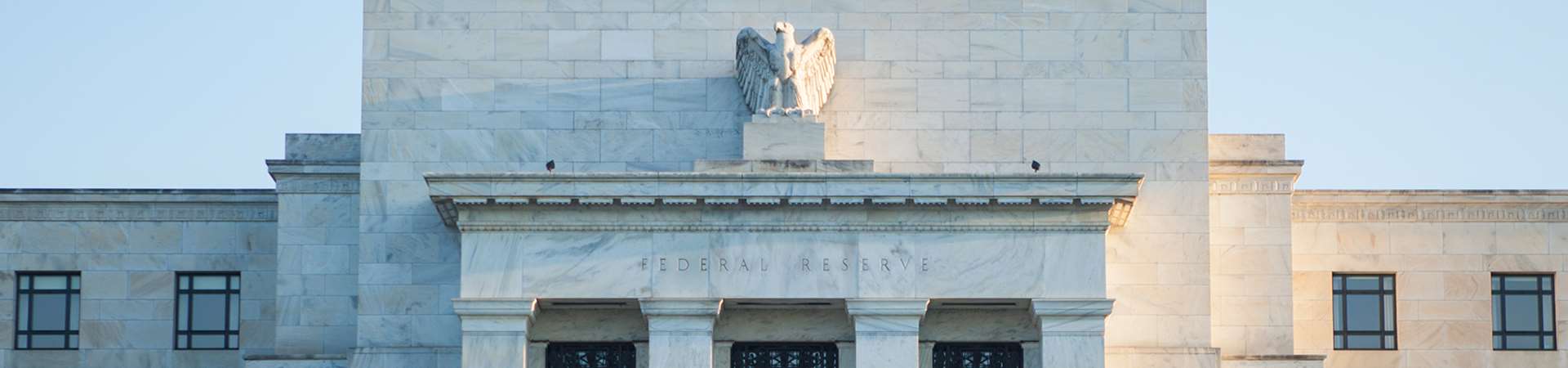

On June 17, Kevin Warsh will address the press for the first time as Fed Chair, inheriting a market that is debating interest rate hikes. The debate centers not on the economy, but on the assumptions behind the numbers.
Inflation
The market outlook: Headline CPI stood at 4.2 percent in May, a three-year high following the 2.4 percent recorded in February 2026 before the war began. Added to this are headline PCE at 3.8 percent and core PCE at 3.3 percent. This is causing enough unease to justify betting on a rate hike.
Warsh’s preferred metric: the Dallas Fed’s trimmed-mean PCE. This measure excludes extreme outliers at both ends of the distribution and stands at 2.3 percent over a six- to twelve-month period, which is close to the Fed’s 2 percent target on a trend basis.
Which interpretation better reflects reality depends on one question: Is the energy price driving the headline CPI and headline PCE merely an outlier, or is it just the beginning? If the Strait of Hormuz remains closed for longer, higher energy prices will affect the prices of other goods and services; inflation will then no longer be confined to the fringes but will be at the center of the price distribution. In that case, even the Trimmed-Mean PCE will no longer be reassuring.
Labor Market
The pattern is repeating itself in the labor market: 172,000 new jobs in May, compared with an expected 80,000, as well as upward revisions totaling 93,000 for March and April. A three-month average of 188,000 – the fastest increase since March 2024. The market sees this as a sign of a tightening labor market, and thus another argument against rate cuts.
Warsh points to the composition: the gains are disproportionately concentrated in government-related sectors. Wage growth stands at 3.4 percent, though it is trending downward and real wages are shrinking. What appears to be strength is, at its core, merely government demand and does not provide a sustainable justification for interest rate hikes.
Warsh's Program
Interest rates will remain between 3.50 and 3.75 percent, and the “easing bias” is likely to be dropped from the FOMC statement. Warsh’s plan is more revealing – and it is coherent. He views interest rates and the balance sheet as a package: the central bank’s balance sheet, which has grown nearly tenfold since 2006, is set to shrink. Since balance sheet reduction has a restrictive effect, it creates room to lower interest rates without easing monetary policy overall.
Behind this lies a different theory of inflation: inflation arises when the government spends and prints too much, not from excessive growth or high wages. Inflation arises when the government spends and prints too much, not from growth or wages
In operational terms, this leads to three consequences:
- Less forward guidance, and possibly no separate interest rate forecast in the dot plot.
- Adherence to the full transition away from average inflation targeting by 2025.
- In the long term, a new Treasury-Fed agreement modeled after the 1951 agreement, which ensured the central bank’s independence.
The market doesn't believe him
What is remarkable is not Warsh’s coherent agenda, but the fact that the market is ignoring it. And although Warsh has the institutional power to implement his agenda, he is nonetheless being overruled by the bond market: The market is pricing in interest rate hikes through the end of the year, and the two-year yield is accordingly above 4.10 percent.
On June 17, investors should pay less attention to the interest rate decision and more to what Warsh will remove from the Fed’s FOMC statement.
Note: This text was translated using AI and may contain translation errors. The German version of the text is authoritative.